
Learn more about the Keeling legacy through articles and interviews below
Binge Our Lecture Series
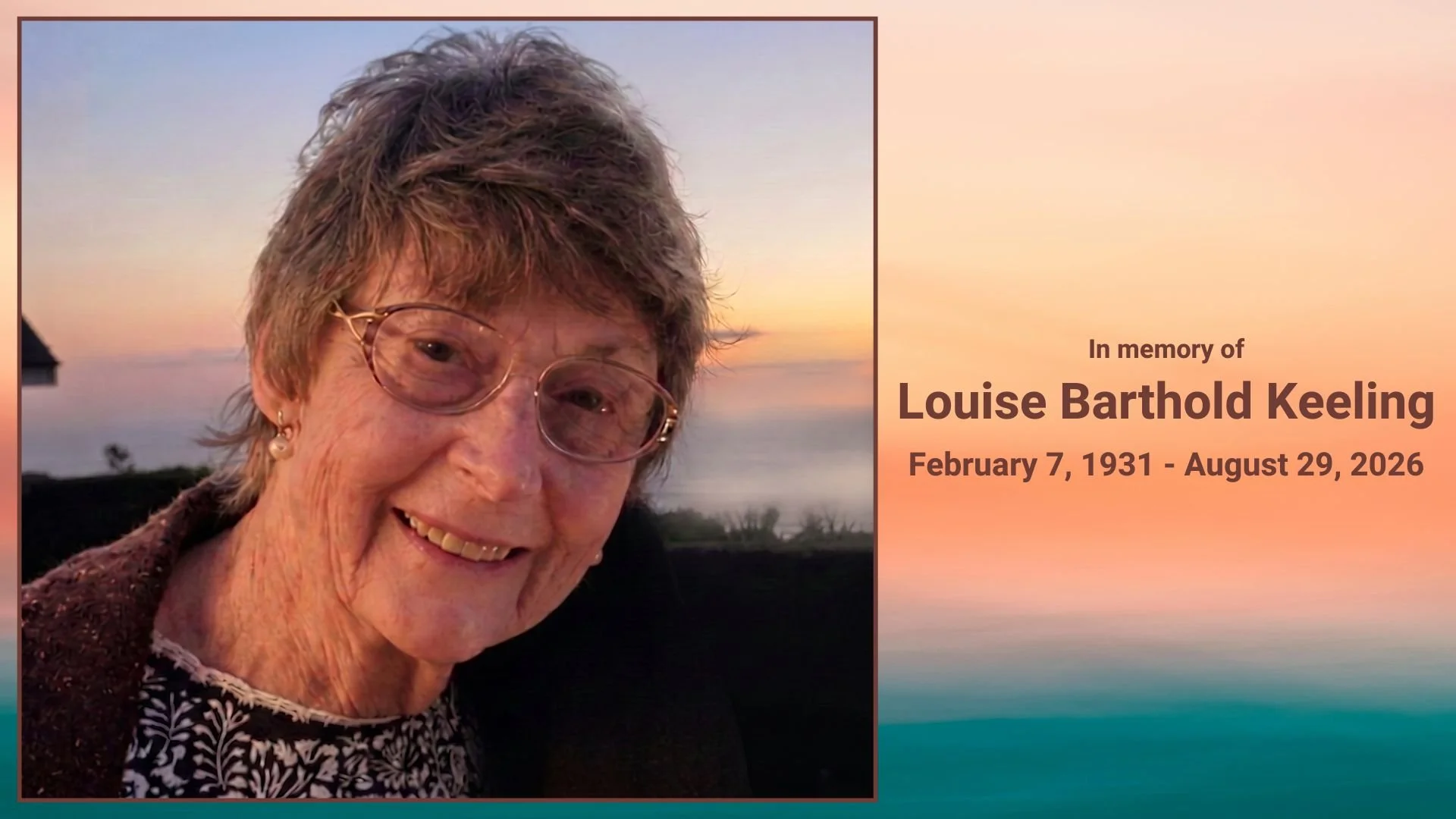
Honoring Louise Barthold Keeling | August 29, 2026
Remembering Louise Keeling
Louise Barthold was born on February 7, 1931 near Winnetka, Illinois, the youngest child of Walter Barthold and Josephine Salmon, immigrants from Europe. She graduated from nearby New Trier High School in 1949 and earned a Bachelor's degree in English at Northwestern University in 1953. In 1954 she married Charles David Keeling, who in 1956 was hired by Scripps Institute of Oceanography, in La Jolla, California, and worked there measuring global carbon dioxide levels and trends for the next 49 years until his death in 2005. Louise and Dave settled in nearby Del Mar where they raised five children, and lived the rest of their lives there apart from three year-long stays in Europe (during Dave's sabbatical leaves) and summers in the Bitterroot Valley of Montana (1986 to 2017).

Sustain What? Podcast | May 8, 2026
Sustaining Long-Term Science in a Short-Term World
Andy Revkin’s podcast highlights how Trump's assault on science budgets is just part of the problem. His guests: Ralph Keeling, the climate-focused Stanford ecologist Chris Field and Betsy Weatherhead, a leading researcher focused on earth observation science and technology. The discussion centers on the work of the Keeling Curve Foundation, which is trying to build momentum for philanthropic, governmental and private-sector investment in Earth observation capacity.

The Economist | July 30, 2025
Why long-term Earth observations must continue
In The Economist, Ralph Keeling explains why unbroken, decades-long measurements are irreplaceable, and what is lost when a record is interrupted.
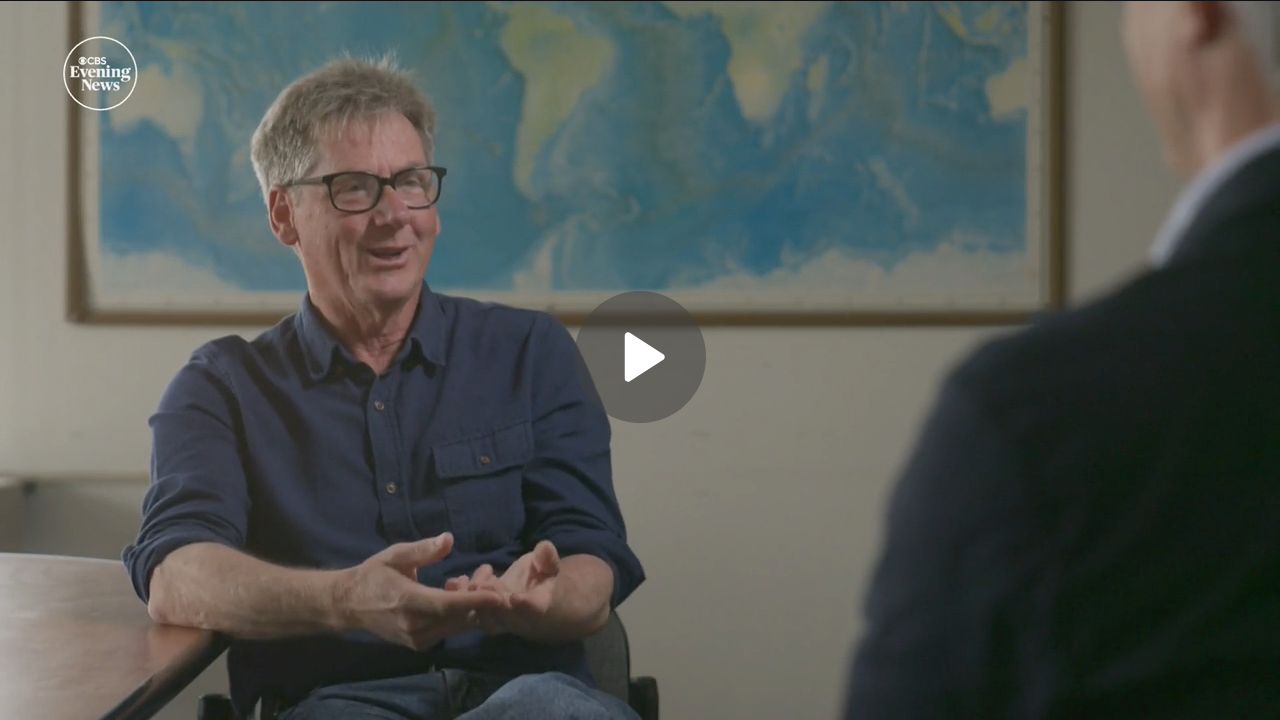
CBS News | May 12, 2025
What it takes to keep a decades-long CO₂ record unbroken
CBS News interviewed Ralph Keeling about the global CO₂ measurement network and why its records depend on uninterrupted funding. A gap of even a few years would break a dataset that has run continuously for decades and that scientists, forecasters and planners rely on to understand how the atmosphere is changing.

Editorial: Bulletin of the Atomic Scientists | May 5, 2025
Keeping the Keeling Curve running
Scientists Eric Morgan and Ralph Keeling trace the funding history of the Keeling Curve. Since 1958, the record has been kept continuous through support from more than a dozen agencies and partners, often changing from one decade to the next. Their editorial explains why that patchwork leaves the record vulnerable, and why a stable funding base matters for one of the world’s most widely used environmental datasets.
Podcast: Cleaning Up | March 12, 2025
What’s at stake when long-term observations stop
On the “Cleaning Up” podcast, Ralph Keeling and Ray Weiss join host Bryony Worthington to discuss how long-term atmospheric measurements are made and maintained, why the expertise behind them is hard to replace, and what is lost when a record is interrupted.
Podcast: Planet SOS
Sea level, observation and the future of Palau
On the “Planet SOS” podcast, Ralph Keeling discusses Palau, a Pacific island nation with unique biodiversity, and how long-term measurements help its communities understand and plan for rising seas.
Podcast: Met office
Mostly Weather: The Keeling Curve
Met Office scientists take a lively look at the fascinating history and science of weather and climate research. Professor Ralph Keeling talks about his father's legacy, the Mauna Loa CO₂ observatory, and the Keeling Curve.
Lecture
Ralph Keeling: Listening to the voice of the Earth (UEA Zuckerman Lecture 2019)
Prof Ralph Keeling reports on results from measurements of carbon dioxide and oxygen in the atmosphere, and how these continue to inform our understanding of widespread changes in the functioning of land and ocean ecosystems.
Podcast: Innovation Hub
The Beginnings Of Climate Science
Met Office scientists take a lively look at the fascinating history and science of weather and climate research. Professor Ralph Keeling talks about his father's scientific legacy, the Mauna Loa CO₂ observatory, and the Keeling Curve.
Documentary
Decoding the Weather Machine
In this two-hour documentary, NOVA explores how weather and climate work, and how decades of measurements help scientists understand and forecast them.
Podcast: Science Vs
How scientists measure what drives Earth’s changing atmosphere
On Spotify’s “Science Vs,” host Wendy Zukerman speaks with Prof. Ralph Keeling, Prof. Chris Field and Dr. David Pierce about how scientists use long-term measurements to tell natural changes in the atmosphere from human-caused ones, and what those records suggest about the decades ahead.
Podcast: The Takeaway
Developing Innovative Ways to Fund Science
Ralph Keeling joins The Takeaway to explain his efforts to help fund his work.
Interview: OPR Climate Change
Crossing 400: The Keeling Curve Reaches a Historic Milestone
Ralph Keeling talks about the Keeling Curve and a historic climate milestone: when the carbon dioxide concentration in our atmosphere exceeded 400 ppm for the first time in human history. Dr. Keeling explains the consequences of this, outlines solutions, and addresses why time is of the essence.

Interview: Yale Environment 360
Son of Climate Science Pioneer Ponders A Sobering Milestone
In an interview with Yale Environment 360, Ralph Keeling discusses his father’s work, reflects on the meaning of CO₂ levels climbing higher than they’ve been in at least 800,000 years, and explains why crossing the 400 ppm mark is a meaningful benchmark in a record that has been measured continuously since 1958.

BBC: Witness History
The Keeling Curve
How Charles D. Keeling began measuring carbon dioxide in 1958, starting the longest continuous record of its kind.
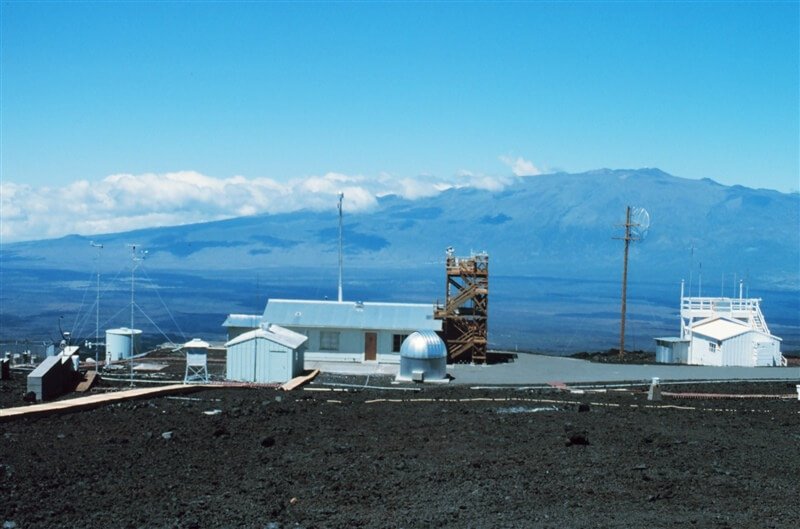
Article: The New York Times
A Scientist, His Work and a Climate Reckoning
What the New York Times had to say about the legacy of Charles D. Keeling and the importance of his long-term atmospheric measurements.
PHOTO CREDITS Station at Mauna Loa: NOAA Corps / Cmdr John Bortniak